
Worried About Squinting in Children? Here’s What You Should Do!
If you’re a parent, noticing that your child’s eyes don’t seem to align properly can be both worrying and confusing. Questions flood your mind. Is this normal? Will they grow out of it? Do they need treatment?
Rest assured, you’re not alone. Squinting, also known as strabismus, is something many parents face, and with the right knowledge, it’s absolutely manageable.
By the end of this blog, you’ll have a clear understanding of why your child might squint, the steps you should take, and actionable tips to ensure the best care for their eye health.

AUTHOR

Ophthalmologist/ Eye Surgeon 13+ Years Exp
MBBS, MS – Ophthalmology
CONDITION
CALL US 24/7 FOR ANY HELP
GET IN TOUCH ON
Summary
1.Definition & Types: Squint (strabismus) occurs when a child’s eyes are misaligned — inward (esotropia), outward (exotropia), upward (hypertropia), or downward (hypotropia) — either constantly or intermittently, such as when tired or focusing.
2.Causes: Common causes include genetics/family history, refractive errors, weak eye muscle coordination, premature birth, developmental conditions, and occasionally underlying eye diseases.
3.Symptoms & Warning Signs: Look for misaligned eyes, head tilting, frequent blinking or eye closure, difficulty focusing, poor hand–eye coordination, light sensitivity, and clumsiness; intermittent squints may appear under stress or during near work.
4.Diagnosis: Pediatric eye specialists perform tests like corneal light reflex, cover–uncover, refraction, visual acuity, and binocular vision assessment; parents’ observations about when the squint occurs also guide treatment.
5.Treatment Options: Depending on severity, treatment may include corrective glasses, patching therapy, eye exercises, or surgery. Early intervention improves outcomes and prevents complications like lazy eye, double vision, or poor depth perception.
6.Cost in India: Treatment costs vary — eye exams (₹800–2,000), glasses (₹1,000–5,000), patching/therapy sessions (₹500–2,000 each), Botox (₹10,000–25,000), and surgery (₹25,000–1,00,000 per eye) with follow-up visits (₹500–1,500).
7.Parental Guidance: Monitor symptoms closely, book timely eye exams, follow prescribed treatments, encourage regular breaks from near work, support your child emotionally, and maintain healthy eye habits.
8.Impact & Outcomes: Early and proper management prevents long-term vision problems, improves school performance, reduces headaches and eye strain, and enhances social confidence; recurrence is possible, making regular follow-up important.
What Is Squinting in Children?
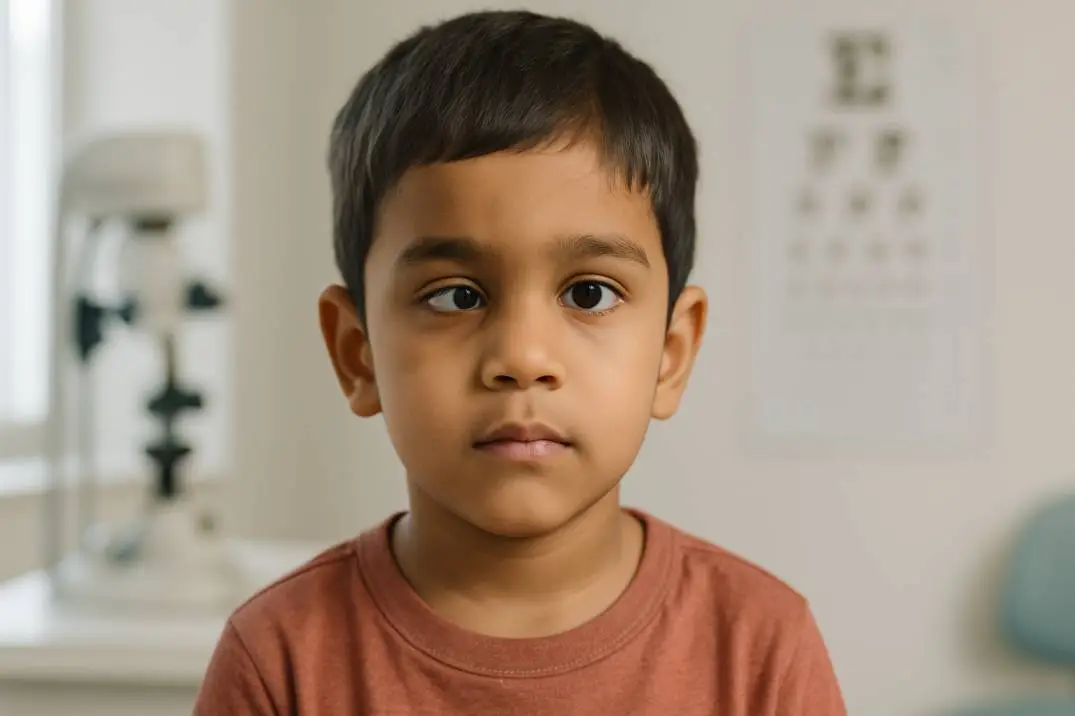
A squint occurs when the eyes do not align correctly. Essentially, while one eye looks straight ahead, the other might turn inwards, outwards, upwards, or downwards.
This misalignment can be constant or happen only on occasion — for instance, when the child is tired, stressed, or trying hard to focus.
Squinting typically results from an imbalance in the muscles that control eye movement. But it’s not just about appearances; it has a functional impact on vision, too.
Early intervention is key, so understanding squinting is the first step to addressing it.
⇒Common Types of Squints:
- Esotropia – Where one eye turns inward.
- Exotropia – Where one eye turns outward.
- Hypertropia – Where one eye turns upward.
- Hypotropia – Where one eye turns downward.
Each of these squints can potentially affect how a child’s brain processes what they see, causing issues like double vision or even vision loss in the affected eye if untreated.
Why Do Kids Squint?
A squint is more common than you might think and can result from various causes. Here are some reasons why it might occur:
1. Family History
Genes have a lot to do with it! If you or someone in the family had a squint as a child, there’s a higher likelihood your child might develop one too.
2. Refractive Errors
Conditions like long-sightedness (hyperopia) can cause your child’s eyes to over-focus, leading to a squint over time. The good news? Corrective glasses often help with this.
3. Eye Muscle Issues
The six muscles controlling eye movements have to work together for the eyes to align. If there’s a weakness or imbalance in one or more of these muscles, a squint can develop.
4. Premature Birth or Developmental Conditions
Premature babies or children with certain conditions like cerebral palsy and Down syndrome are more likely to develop squints.
5. Eye Diseases
While rare, some squints might indicate underlying eye problems like cataracts or tumours. This is why a prompt evaluation by a eye specialist is essential.
How Doctors Diagnose Squint in Children?
An eye specialist conducts quick and painless tests such as:
1.Corneal light reflex test to check alignment
2.Cover–uncover test to detect eye movement differences
3.Refraction test to check if glasses are needed
4.Visual acuity assessment for each eye separately
5.Binocular vision tests to evaluate how the eyes work together
Parents are also asked when the squint appears — during near work, distance viewing, or when tired — which helps identify the type.
Why Early Treatment Matters?
You might think, “Can’t I wait to see if my child grows out of it?” While some squints can improve naturally, delaying intervention can lead to vision complications.
⇒Possible Risks Without Treatment:
- Amblyopia (Lazy Eye): If the brain starts ignoring input from the misaligned eye, it could lead to reduced vision in that eye.
- Poor Depth Perception: Misaligned eyes can make it harder for your child to perceive spatial relationships effectively.
- Double Vision: This can make everyday tasks, like reading or writing, challenging.
The earlier the squint treatment, the better the outcomes. Children’s eyes are still developing, and quick action often means greater chances of full recovery.
What Can You Do as a Parent?
The moment you notice your child squinting, it’s natural to feel anxious. However, taking proactive steps can set their eye health on the right path.
1. Book an Immediate Eye Exam
The first and most important step is scheduling an appointment with a paediatric optometrist or ophthalmologist. Specialists can diagnose the type of squint and recommend appropriate treatment.
2. Understand the Treatment Options
Once diagnosed, several effective treatments can correct squinting. These may include one or a combination of the following methods:
- Glasses: If the squint is related to refractive errors, corrective glasses are often prescribed. Many parents are amazed at how glasses alone resolve the issue!
- Patching: Your child might need to wear a patch over the stronger eye to encourage the weaker one to work harder. While it might sound daunting, there are creative and fun patches available that kids enjoy wearing.
- Eye Exercises: Some squints can be improved with specific exercises to strengthen eye muscles. An eye specialist will guide you on these.
- Surgery: For squints that don’t improve with the above methods, surgery might be recommended to adjust the eye muscles. It’s a safe procedure that’s performed successfully in children worldwide.
3. Observe Symptoms Closely
Keep track of when and how often your child squints. Does it happen when they’re tired? Outdoors in bright sunlight? These details can help specialists craft a tailored treatment plan.
4. Encourage Regular Eye Breaks
If your little one spends time on screens or doing activities requiring close focus, ensure they take breaks. The popular 20-20-20 rule can work wonders — every 20 minutes, they should look at something 20 feet away for at least 20 seconds.
5. Be Patient and Supportive
Children may feel self-conscious about squinting, especially if treatment involves wearing glasses or using patches. As a parent, your positive reinforcement and involvement can make all the difference.
Common Symptoms Parents Should Watch For
1.One eye appearing misaligned or drifting
2.Child tilting their head to see better
3.Frequent blinking or closing one eye
4.Difficulty focusing or poor hand–eye coordination
5.Squinting more when tired, sick, or in bright light
6..Light sensitivity or unusual clumsiness
Some squints appear intermittently at first, especially when the child is tired or doing near work.
📞 Concerned About Your Child’s Squint? Get Expert Care at SaiJyothi Eye Hospital, Hyderabad
If you notice any of these signs in your child, early evaluation is crucial to prevent long-term vision problems. Sai Jyothi Eye Hospital in Hyderabad offers advanced diagnostics and specialized pediatric squint treatment by experienced eye specialists.
Book a consultation today and ensure your child receives the most accurate diagnosis and the best possible care.
👉 Schedule an appointment at SaiJyothi Eye Hospital and give your child the clear, healthy vision they deserve.
Cost of Treating Squint in Children in India
The cost of treating squint in children in India can vary depending on the type and severity of the condition, the child’s age, and the treatment method chosen. Here is a simple breakdown you can include:
1.Comprehensive eye evaluation: ₹800 – ₹2,000
2.Cycloplegic refraction (detailed child eye test): ₹500 – ₹1,000
3.Prescription glasses for refractive squint: ₹1,000 – ₹5,000 depending on lens type
4.Patching therapy / vision therapy sessions: ₹500 – ₹2,000 per session
5.Botox injection for squint (selected cases): ₹10,000 – ₹25,000
6.Squint surgery for children:
Typically ₹25,000 – ₹1,00,000 per eye, depending on:
1.Number of muscles corrected
2.Hospital type
3.Whether general anesthesia and post-operative therapy are required
7.Follow-up visits and post-surgery care: ₹500 – ₹1,500 per visit
Tips to Prevent Further Eye Problems
While you can’t always prevent a squint, safeguarding your child’s overall eye health helps reduce complications. Here are some tips:

- Provide a balanced diet rich in vitamins A, C, and E to nourish their eyes.
- Ensure proper lighting for homework or reading to prevent unnecessary eye strain.
- Visit the optometrist regularly — annual check-ups are essential for spotting issues early.
Final Words for Parents
Squinting in children can feel like a complicated issue at first, but with the right approach, it’s highly treatable. Remember, what matters most is that you act quickly and trust the process. Your child’s vision development depends on your proactive steps today.
⇒Take Action Today!
If you’re in Hyderabad and have concerns about your child’s squint, don’t wait. Book an appointment with our experienced eye specialists to get personalised care and expert advice. Together, we’ll ensure your child sees their world clearly and confidently!
FAQ
1. Can a child suddenly develop a squint even if their eyes were normal earlier?
Yes. Some children develop a squint suddenly due to illness, stress on the eyes, rapid vision changes, or uncorrected refractive errors. Sudden onset squint should be checked immediately.
2. Are there different types of squints that behave differently?
Yes. Some squints are constant, some intermittent, some appear only when the child is tired, and others only at close or far distances. Each type may need a different treatment approach.
3. Can screen time worsen or trigger a squint?
Screen time doesn’t directly cause squint, but excessive close-up work can strain the focusing system and make hidden squints more noticeable. Good screen habits can help reduce symptoms.
4. Can squint affect a child’s school performance?
Yes. Children with untreated squint may struggle with depth perception, reading comfort, concentration, and copying from the board. Early treatment helps avoid learning difficulties.
5. Are there special glasses designed specifically for squint?
Yes. Some children need glasses that correct refractive errors, while others may need prism glasses to help eyes work together. The type depends on the child’s eye muscles and focusing ability.
6. What are warning signs of hidden or intermittent squint?
Signs include frequent blinking, closing one eye in bright light, tilting the head, clumsiness, eye rubbing, or avoiding tasks like reading or catching a ball.
7. Can squint come back after treatment or surgery?
It’s possible. Growth, vision changes, or uneven muscle strength can cause recurrence. Regular follow-up is important to adjust treatment when needed.
8. Does squint always cause lazy eye?
No. Some children with squint have normal vision in both eyes. But many develop lazy eye because the brain starts ignoring the misaligned eye — which is why early correction matters.
9. Is there an ideal age for squint surgery in children?
Although surgery can be done at many ages, earlier alignment (often before school age) offers better chances for normal binocular vision. The exact timing depends on severity and cause.
10. How long does a child need to wear a patch if they have lazy eye?
Patching schedules vary — some children need a few hours daily for months, others require longer or shorter durations. The doctor customizes this based on improvement.
11. Can nutrition or vitamins improve squint?
Nutrition cannot correct squint, since misalignment is due to muscles, nerves, or brain-eye coordination. But a balanced diet supports overall eye development.
12. Can squint be prevented?
Most squints cannot be prevented because they arise from genetics or developmental issues. What can be prevented is worsening — through regular eye exams and correcting vision problems early.
13. Is it safe for children with squint to play outdoor sports?
Usually yes, unless there are serious vision issues. However, sports requiring strong depth perception (cycling, cricket, basketball) may feel challenging until treatment improves alignment.
14. Can squint cause headaches or eye strain?
Yes. Constant misalignment forces the brain to work harder to fuse images, which can lead to headaches, tired eyes, or difficulty focusing.
15. Can squint affect a child emotionally or socially?
Absolutely. Children may face teasing, feel self-conscious, or avoid eye contact. Early correction helps both vision and confidence.
Appointment Form
AUTHOR

Ophthalmologist/ Eye Surgeon 13+ Years Exp
MBBS, MS – Ophthalmology
CONDITION
CALL US 24/7 FOR ANY HELP
GET IN TOUCH ON
Appointment Form
About Us
Saijyothi Eye Hospital, where excellence meets compassion. Founded by the esteemed Dr. Saibaba Goud, M.S., Ph.D., Padma Shri Awardee, our institution stands as a beacon of hope for those seeking exceptional eye care. Dr. Saibaba Goud’s vision goes beyond restoring sight, aiming to transform lives. At Saijyothi Eye Hospital, we offer exceptional care, from routine eye exams to advanced surgeries, with personalized services tailored to each patient’s needs.
Our Locations:
West Marredpally
- Plot No 185, Road No 1 Beside Kennedy School, Opposite lane to Om Shanthi Foods, West Marredpally, Secunderabad-500026.
Kompally
- 3rd Floor, Vaishnavi Lemini Arcade, Doolapally Road, Above Ratnadeep Super Market, Devender Colony, Kompally, Hyderabad, Telangana 500014
Uppal
- D.No. 2-2-15, Hanuma Sai Nagar, Uppal X Roads, Near Gandhi Statue Centre, Uppal, Hyderabad, Telangana 500039